Nick Schuyler’s dive beneath the overturned boat
Not Without HopeNick Schuyler’s dive beneath the overturned boat was the decisive last-ditch action of his forty-hour struggle at sea. Convinced that dehydration or starvation, rather than the elements alone, would kill him, Nick entered the cold water to reach the cooler trapped beneath the hull. He failed to retrieve its supplies, but survived the attempt by recovering a drifting life jacket and returning to the boat, carrying himself through a threshold at which ordinary strength, judgment, and hope were nearly gone.
The Decision to Dive
Nick’s decision arose from a stark recognition that waiting was no longer passive endurance but a path toward death. He had become frightened that hypothermia or dementia was setting in, and he understood the random visions and yells he was experiencing as signs that his mind was beginning to shut down. The symptoms were not simply evidence of weakness: prolonged immersion, salt-water exposure, dehydration, and lack of food were undermining the capacities required for survival. The broader medical account in the narrative explains that swallowing seawater could produce a dangerous sodium imbalance, draw water from the body’s cells, and progress toward delirium, seizures, heart failure, and death from dehydration. Cold water presented a second, overlapping threat, with hypothermia bringing clumsiness, shallow breathing, blue lips, confusion, slurred speech, and irrational behavior.
Against that deterioration, Nick imagined the provisions he believed remained beneath the hull: a turkey sandwich, peanut-butter-and-jelly, a jug of water, and perhaps a case or two of beer. The cooler represented more than an object containing supplies. It was the possibility of changing the conditions of the ordeal. Nick understood that nothing would change if he remained where he was, waiting until death arrived, and he resolved to make one final fight rather than accept that outcome.
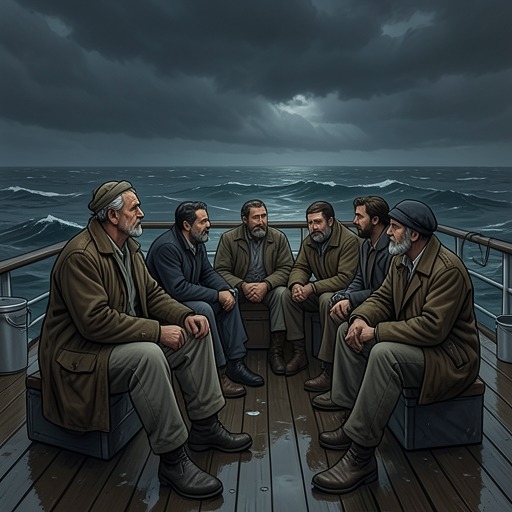
The choice was especially dangerous because Nick had to dive without a reliable partner to assist him. He feared becoming trapped beneath the boat and being unable to surface. His strength was severely limited after nearly two days in the water, and he knew that the waves could drive the overturned hull up and down while preventing him from holding his position. He also had no working means of calling for help: his phone was ruined, and Will Bleakley’s phone had never worked. Before entering the water, Nick looked at Will’s identification and expressed his love and regret to his dead friend, making the dive both a practical search for supplies and an encounter with the losses surrounding him.
Preparation and First Attempts
Nick prepared as carefully as his damaged body allowed. He threaded the steering cable through his life jacket and backpack and tied them to the motor, attempting to create a connection that might keep the equipment from drifting away. His hands were cold, cut, and inflexible, making even a double knot difficult. His legs were swollen and bleeding below the knees, while prolonged contact with the fiberglass keel had left his lower body in nearly unbearable pain. He nevertheless removed his sandals, placed them in the backpack, wedged the life jacket and pack between the motor and the swim platform, and climbed over the motor into the water.
The entry was less controlled than intended. Nick tried to descend slowly, like a person stepping down a pool ladder, but the rocking boat and his weakness caused him to drop into the sea. The water was cold again, and salt stung the cuts across his body. He floated beside the hull, stiff and exhausted, then tried to reach the boat’s side while repeatedly losing his grip. The five-to-eight-foot swells moved him like a swimmer caught in a current flowing the wrong way, slamming him against the boat and consuming the energy he needed for the dive.
His first attempt to position himself was disrupted by a wave. Nick felt too buoyant in his sweatshirt and orange winter jacket, but he was too cold to remove them. When he opened his mouth for a breath, a wave struck him, forcing water into his mouth and sending him into coughing and gagging. The second attempt succeeded in getting him beneath the boat. He waited for a wave to pass, seized the railing, and pushed himself underwater. The water was clear enough for him to see the overturned interior: gas cans remained bungeed in place, some poles were still latched into grooves along the side, and fishing rods had disappeared from the canopy.
The Cooler and the Failed Retrieval
The cooler was visible beneath the boat, a large white Igloo cooler secured by a red bungee cord between the deck and the captain’s chair at the center console. Nick recognized it as the same cooler from which Will had found Gatorade earlier in the ordeal. That recognition gave the object an almost tangible promise: it might contain sandwiches, snacks, more Gatorade, or water. Yet reaching it did not mean being able to open or remove it.
Nick just managed to touch the cooler. His heart seemed ready to burst from his chest, and the railing struck his back, throwing him off balance. He had been underwater for only about five seconds, but he surfaced gasping as though he had swum repeatedly across a pool. The memory of childhood breath-holding contests with his sister offered a grim contrast to the present effort: what had once been a game had become a fight against drowning beneath a violently moving boat.
After regrouping at the stern, Nick made a final attempt. He approached at a forty-five-degree angle, placed his heels against the inside of the boat, and kicked toward the upside-down cooler. He reached it and pulled the lid down perhaps an inch, but the bungee was tight. Frightened, out of breath, and unable to generate enough force, he could not open it farther before the lid snapped shut. The cooler remained physically close yet functionally inaccessible, turning the promise of food and water into one of the ordeal’s cruelest reversals.
Recovery of the Life Jacket
The failed attempt left Nick exhausted and discouraged. He surfaced feeling helpless and close to drowning, with severe chest pain and breathing as rapid and deep as after a series of sprints. The effort was unlike the demanding football workouts he knew: cold, hunger, and prolonged immersion had transformed physical exertion into a threat to his heart and lungs.
Then he saw the life jacket about fifty feet behind the motor. It had come untied and was drifting away. Nick understood that recovering it was not optional. He waited only long enough to catch his breath, then swam after it, repeatedly sinking beneath the surface and struggling back up. He described the effort as the worst leg burn he had ever experienced, surpassing sprints, stadium steps, and every other aerobic workout he had undertaken.
Nick eventually made headway through the waves, alternating between treading water, breaststroke, and freestyle according to which movement hurt least. After roughly ten more forceful kicks and arm strokes, he reached the life jacket, placed it beneath his stomach for flotation, and began the return swim. The journey back took twice as long. Once beside the boat, he put the jacket on and concentrated on breathing for five minutes before forcing himself to climb onto the hull. Swinging a leg over the motor and dropping his injured body onto the keel caused intense pain, but the flotation device had restored a vital protective barrier between him and the water.
Significance and Consequences
The dive changed the immediate terms of Nick’s survival without solving the larger crisis. He did not obtain the food or water he had sought, and his breathing remained dangerously rapid for an extended period afterward. He feared a heart attack or asthma attack and began to panic, believing he might have only a few hours left. The action therefore produced no simple triumph: the objective failed, the body deteriorated, and the recovered life jacket became the limited reward for an ordeal that had nearly ended in drowning.
The dive also clarifies the difference between deliberate survival behavior and the apparent abandonment of the other boaters. Marquis Cooper had later slurred and rambled after ingesting salt water, gagging, dry heaving, and shivering continuously. Corey Smith had developed similar symptoms before suddenly making repeated, aggressive efforts to climb onto the hull, behavior that Nick recognized as no longer belonging to the friendly, easygoing man he knew. The medical explanation offered afterward rejected the idea that Marquis, Corey, and Will simply gave up: hypothermia could cause delirium, falling potassium levels, and damage to the heart’s cell membranes until contraction failed. Their confusion and disappearance were physiological consequences of the environment, not straightforward decisions to surrender.
Nick’s own survival likewise cannot be reduced to willpower alone. His dive depended on the boat’s remaining structure, the visible cooler, the railing, the motor, the equipment he could tie off, and the life jacket he managed to recover. It was a precarious restoration of one protective layer after another had failed: the weather had worsened, the anchor had contributed to the capsizing, no emergency beacon had transmitted their position, and the men had entered the water in soaked clothing. The Florida Fish and Wildlife Conservation Commission later attributed the accident to the anchor line’s improper attachment to a port-side transom eye bracket, the attempt to throttle forward to free the anchor, and insufficient slack that allowed the stern to submerge and the boat to capsize.
When the Coast Guard eventually recovered Nick, his temperature was 89.5 degrees rather than the normal 98.6. His breathing was labored, his lips were turning blue, his skin was cool and clammy, and he appeared to be entering the early stages of shock. These conditions place the dive in its full physiological context: it was performed by a man already nearing the limits described by the survival data for a young person immersed in water near sixty-five degrees. Its significance lies not in a clean victory over nature, but in the fact that Nick continued making narrow, costly choices after the available margin for error had almost disappeared.